https://twitter.com/andersutbult/status/298874326231429121
Är ni med – det är alltså OBLIGATORISKT för kommunerna att erbjuda möjligheten för de föräldrar som VILL utnyttja servicen.

https://twitter.com/andersutbult/status/298874326231429121
Är ni med – det är alltså OBLIGATORISKT för kommunerna att erbjuda möjligheten för de föräldrar som VILL utnyttja servicen.
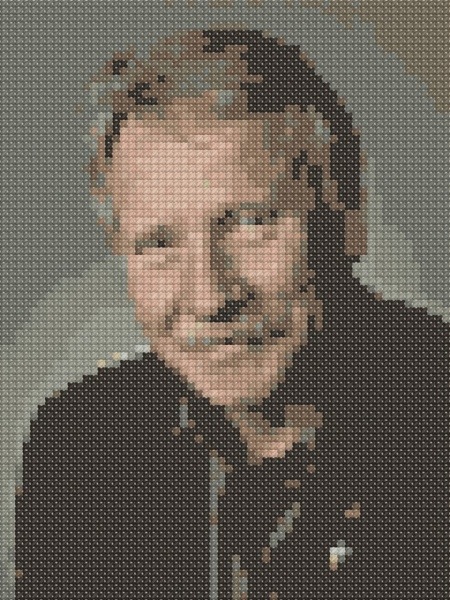
Malmös starke man avgår och ser tillbaka.
Nu börjar maktkampen. Jag tror på Katrin Stjernfeldt Jammeh.
Moderaterna, guldgalonernas gamla beskyddare, ligger i fejd med militären och kallar sig arbetarparti. Centern, en gång landsbygdsintressets och värdekonservatismens hemvist, är tummelplats för nyliberaler från Stureplan. Folkpartiet, för inte så länge sedan borgerlighetens radikala samvete, har blivit ett högerparti, fixerat vid ordning och disciplin. Socialdemokraterna har begravt planhushållningsidéerna och presenterar sin politik i form av affärsplaner. Miljöpartiet vill att Sverige stannar i EU, Vänsterpartiet tänker bli ett glesbygdsparti och Kristdemokraterna har lagt Gud på hyllan.
Bara hos riksdagens nykomlingar, Sverigedemokraterna, är allt som vanligt med samma gamla rasism, nu också fångad på film.
På TV4 sjunger en slätkammad och pastoralt leende Mikael Wiehe i palestinschal om hur det är att bli gammal.
Det är lockande att somna om.
Jag snubblar över en viktig text:
Behaviorists also argue that the summation of individual choices, in totality, cannot be relied upon to ensure the progress of mankind and the enhancement of the public good. The aggregate does not necessarily produce rationality; rather, it is more likely to result in inefficiency and inequality.6 The behaviorists maintain that forces, riding the rationale of the grail of competition, tend to warp the public good causing both inefficiency and inequality. Put simply, the public good is more than the sum of individual preferences and choices. The public good is beyond the exercise of self-interests. It is a great misunderstanding, indeed, a fallacy, to assume that people acting individually in their own self-interest can achieve the public good.7 We have known this since it was explained to us by Rousseau in 1758, as a cornerstone of democratic thought, that “personal interest is always in inverse ratio” to the common interest.8 Thus, a system where parents take public money and indulge their self-interests is highly problematic for the education policy of a state or nation.
Slutklämmen summerar diskussionen om friskolor:
Stiglitz quotes Alexis de Tocqueville who said that the main element of the “peculiar genius of American society” is “self-interest properly understood.” The last two words, “properly understood,” are the key, says Stiglitz. According to Stiglitz, everyone possesses self-interest in the “narrow sense.” This “narrow sense” with regard to educational choice is usually exercised for reasons other than educational quality, the chief reasons being race, religion, economic and social status, and similarity with persons with comparable information, biases and prejudices. But Stiglitz interprets Tocqueville’s “properly understood” to mean a much broader and more desirable and moral objective, that of “appreciating” and paying attention to everyone else’s self-interest. In other words, the common welfare is, in fact, “a precondition for one’s own ultimate well being.”17 Such commonality in the advancement of the public good is lost by the narrow self-interest. School tuition vouchers and charter schools are the operational models for implementation of the “narrow self-interest.” It is easy to recognize, but difficult to justify.
Jag har svårigheter att tolka Stiglitz.

Jag diskuterar musik med studenter och vi tittar på den här aningen skolkritiska filmen:
När filmen kom 1982 tyckte jag att det var en påfrestande dystopi. Nu är jag inte lika avvisande mot fabriksmetaforen. Tyvärr.
Jag ska jobba på mitt yviga kroppsspråk. Det riskerar att skymma budskapet.
Löfven säger tvärsäkert i Aktuellt att vi VET att de som inte fullföljer gymnasiet hamnar i arbetslöshet.
Jag erkänner motvilligt att Jan Björklund har de bästa argumenten i skoldebatten i Aktuellt.
Baylan: – Se verkligheten!
Tödde och Mödde är i grunden överens om värdet av tidiga betyg. Debatten slutar i ett stort jaså. Jag drabbas av stort främlingskap och önskar att min teveapparat slutar fungera.
Jag gillar det här försöket att definiera empati som något annat än känslomässig spegling. Det riskerar att bli ganska kladdigt annars.
Efter den här filmen tror jag att det går att undervisa i empati – alternativen är så deprimerande!!!!
Jag blir tipsad om en text från Framtidskommissionen i den här antologin och letar förväntansfullt men förgäves på nätet:
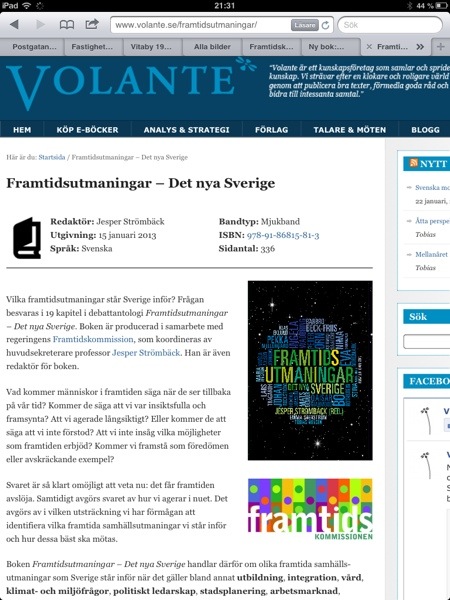
Antagligen är jag bortskämd som trodde att alla statligt finansierade texter skulle göras tillgängliga på nätet. Är det hela ett skämt?
https://twitter.com/pernillaseverso/status/295633547786604545