Här finns utrymme för tolkningar!
Tack för tipset Shirit
Här finns utrymme för tolkningar!
Tack för tipset Shirit
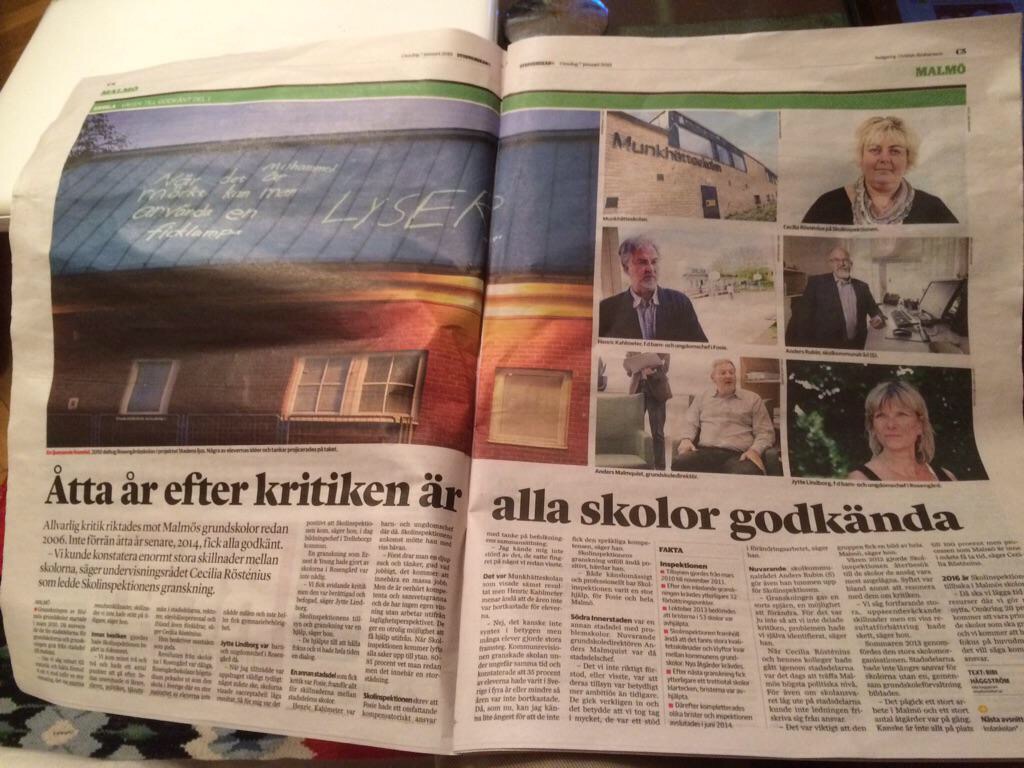
Jag är lite förvånad över hur nöjda alla inblandade tycks vara. Någon kanske skulle problematisera den här formen av skolutveckling uppifrån?
Vad händer på den kollegiala nivån?
En studie visar att barn blir mindre nyfikna när lärare undervisar på ett skolliknande (vad nu det är) sätt.
Why might children behave this way? Adults often assume that most learning is the result of teaching and that exploratory, spontaneous learning is unusual. But actually, spontaneous learning is more fundamental. It’s this kind of learning, in fact, that allows kids to learn from teachers in the first place. Patrick Shafto, a machine-learning specialist at the University of Louisville and a co-author of both these studies; Noah Goodman at Stanford; and their colleagues have explored how we could design computers that learn about the world as effectively as young children do. It’s this work that inspired these experiments.
These experts in machine learning argue that learning from teachers first requires you to learn about teachers. For example, if you know how teachers work, you tend to assume that they are trying to be informative. When the teacher in the tube-toy experiment doesn’t go looking for hidden features inside the tubes, the learner unconsciously thinks: “She’s a teacher. If there were something interesting in there, she would have showed it to me.” These assumptions lead children to narrow in, and to consider just the specific information a teacher provides. Without a teacher present, children look for a much wider range of information and consider a greater range of options.
En skicklig lärare måste alltså kunna ta några steg tillbaka ibland. Men det visste vi nog.
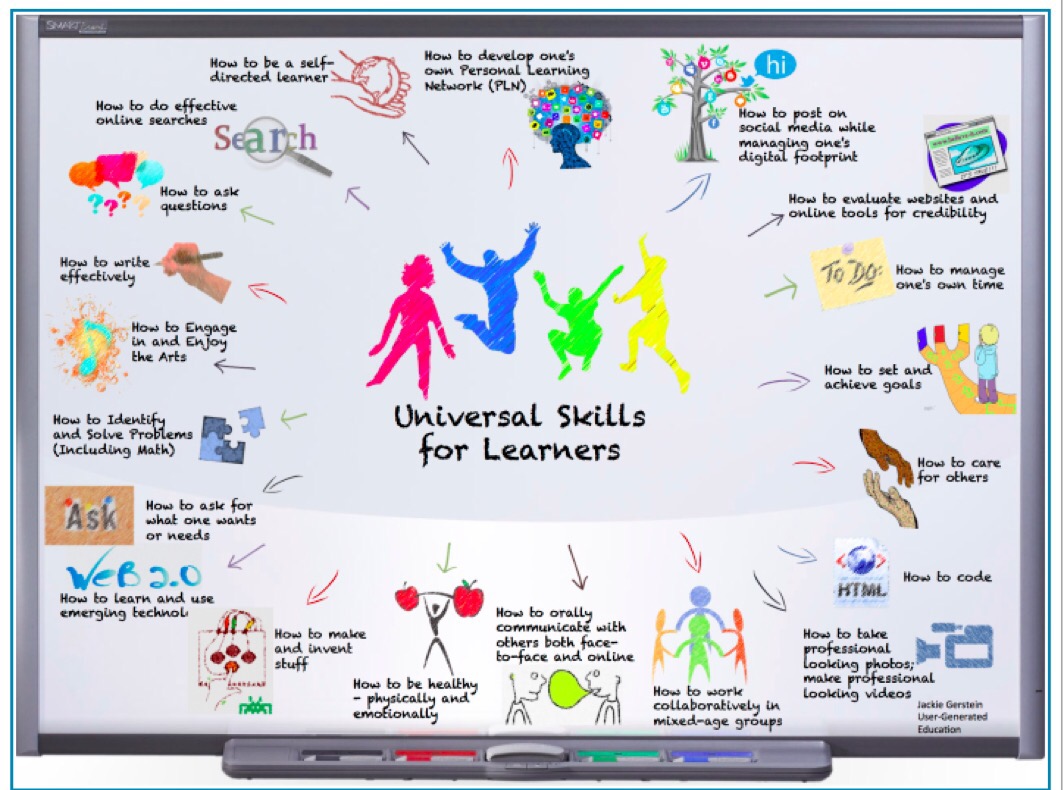

Idag har vetenskaplighet diskuterats på Twitter.
I DN beskriver företrädare för skolforskningsinstutet ambitionerna bakom satsningen.
Jag möter en viss cynism i de muntra nyårslöften från lärare i New York som finns här. Läs och jämför – eventuellt gråt.
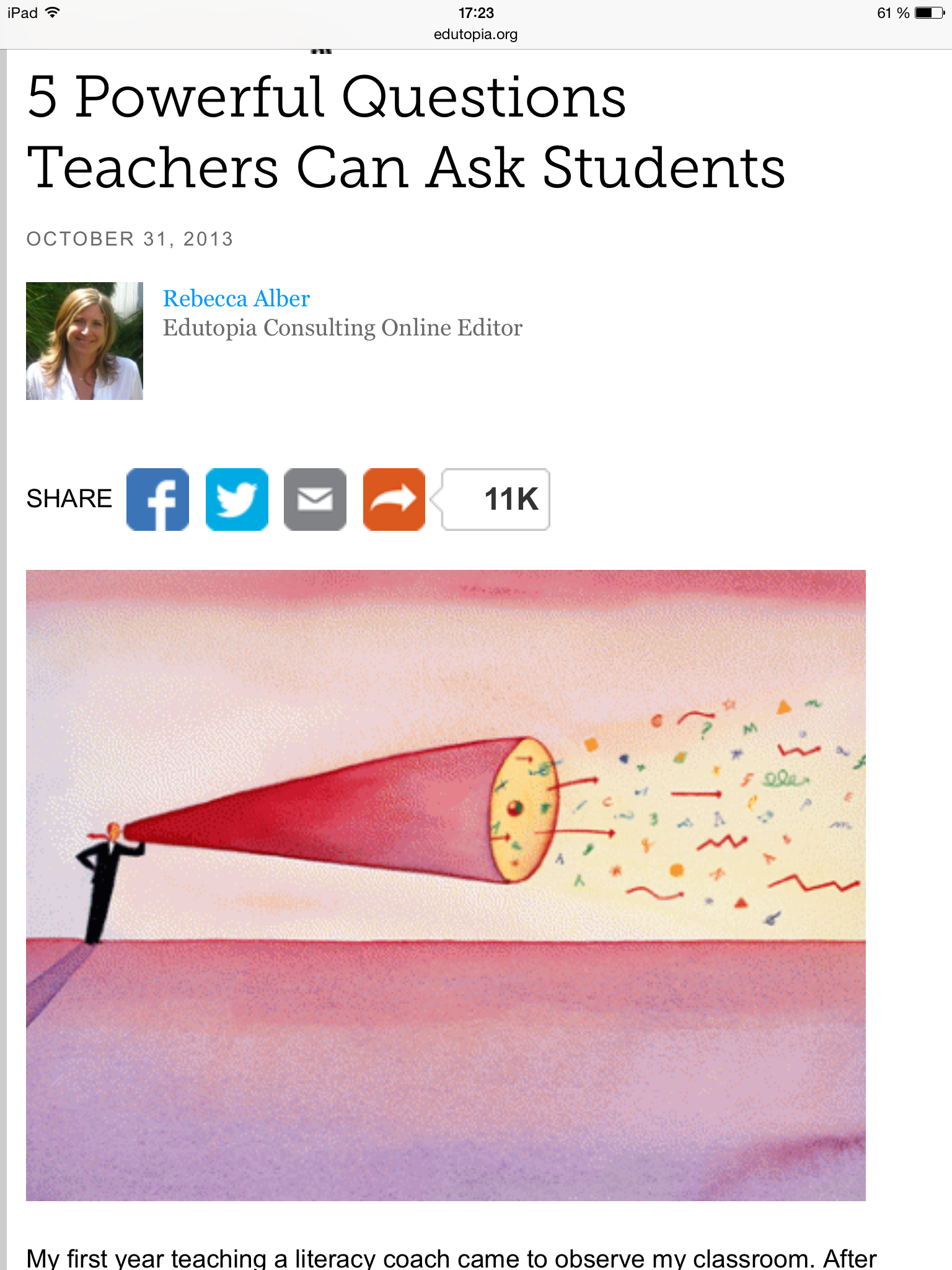
Själv tänker jag återinträda i arbetslivet med obruten entusiasm. Och tillämpa de här frågorna.
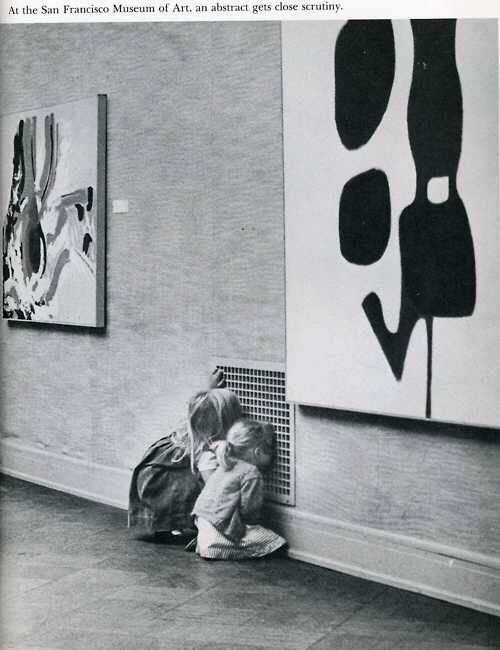
Det mest spännande händer utanför ramarna. Men jag är glad att det finns ramar.
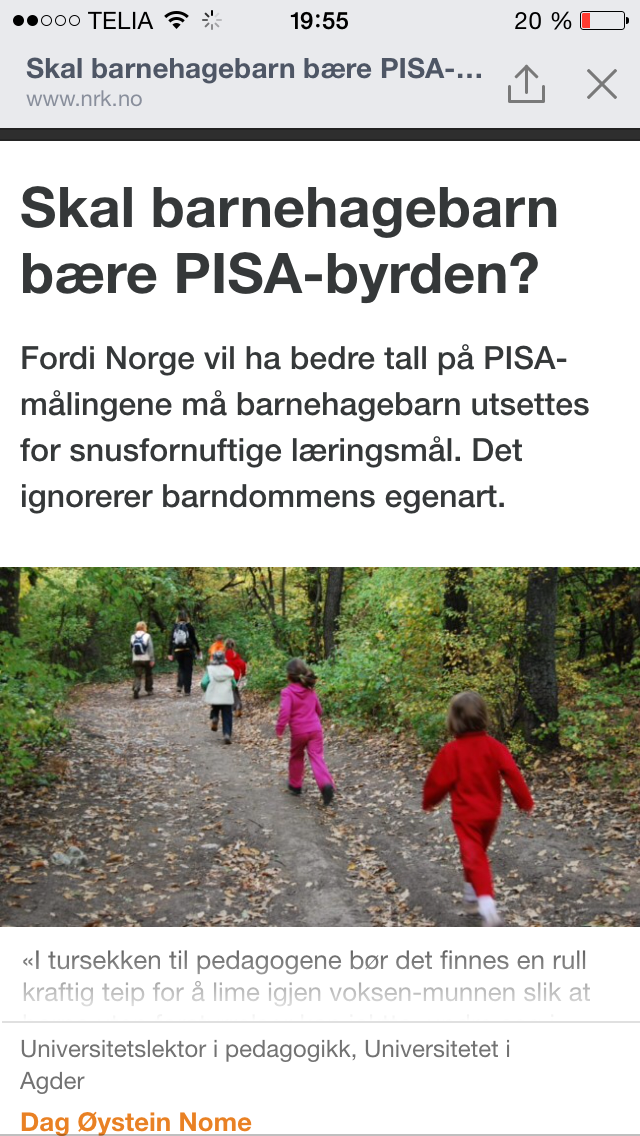
Jeg mener vi bør tillate at barn opplever blomster som skjønne uten å telle kronblad, biler som tøffe uten å kunne navngi fargen og steiner som skatter uten å måtte kategorisere de som gneis eller granitt. Barn bør kunne elte kroppen i alle mulige posisjoner i kratt og kjerr uten å høre preposisjoner resitert i bakgrunnen. I tursekken til pedagogene bør det finnes en rull kraftig teip for å lime igjen voksen-munnen slik at barna uten forstyrrelser kan iaktta, undre seg i stillhet, hviske magiske ord til hverandre og gi mystiske ulogiske forklaringer på det som skjer rundt dhttp://www.nrk.no/ytring/skal-barnehagebarn-baere-pisa-byrden_-1.12109920em – uten snusfornuftige avbrytelser.
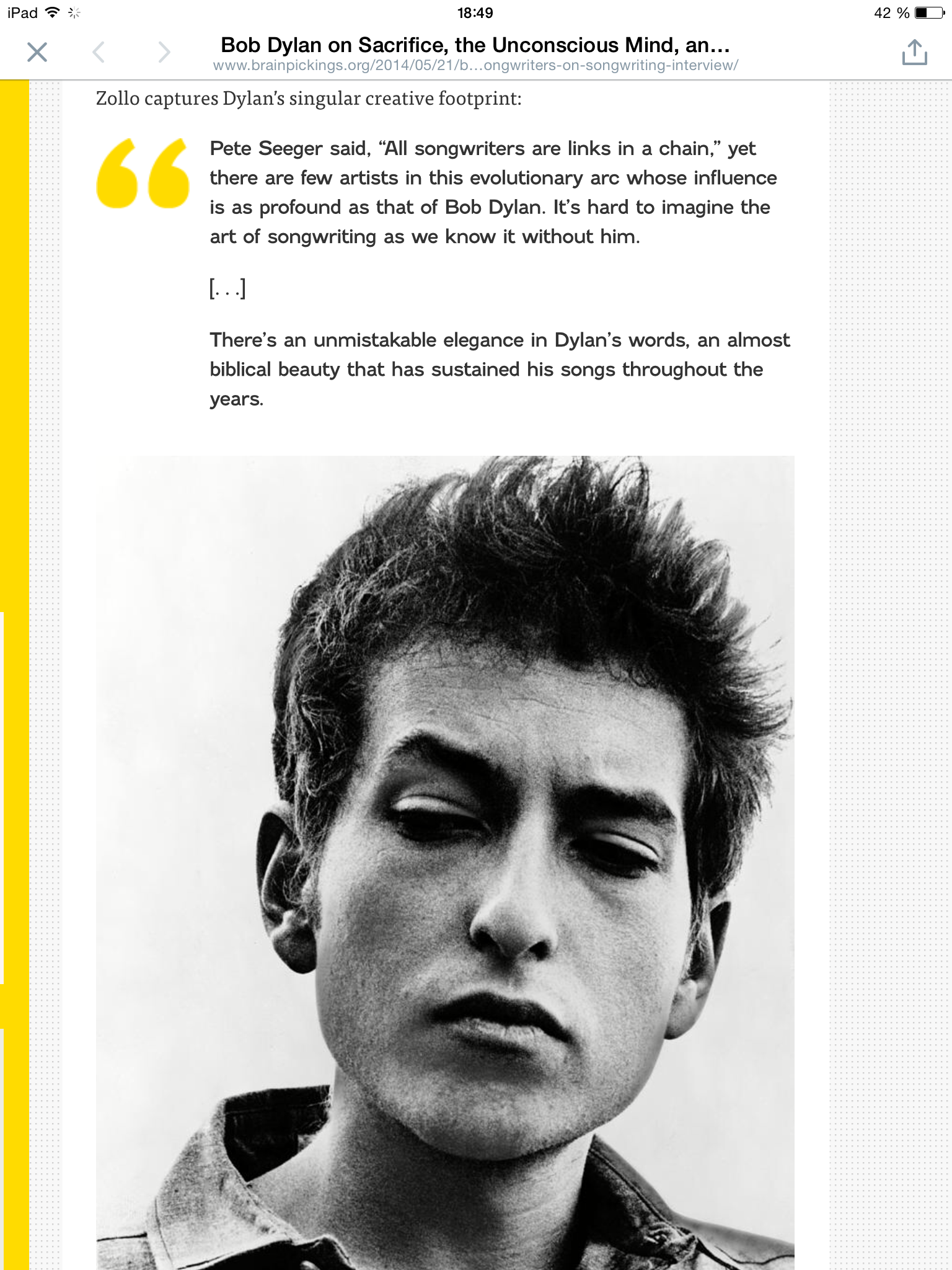
When Zollo asks Dylan whether he sees himself the way Van Morrison famously characterized him, Dylan replies:
[Pause] Sometimes. It’s within me. It’s within me to put myself up and be a poet. But it’s a dedication. [Softly] It’s a big dedication.
[Pause] Poets don’t drive cars. [Laughs] Poets don’t go to the supermarket. Poets don’t empty the garbage. Poets aren’t on the PTA. Poets, you know, they don’t go picket the Better Housing Bureau, or whatever. Poets don’t… poets don’t even speak on the telephone. Poets don’t even talk to anybody. Poets do a lot of listening and … and usually they know why they’re poets! [Laughs]
[…]
Poets live on the land. They behave in a gentlemanly way. And live by their own gentlemanly code.
[Pause] And die broke. Or drown in lakes. Poets usually have very unhappy endings…
Jag försöker relatera detta till Niklas Strömstedt och Mauro Scoccos diskussion om hur man skriver en bra låt. Det var något med antenner, väntetider och osynligt bläck.
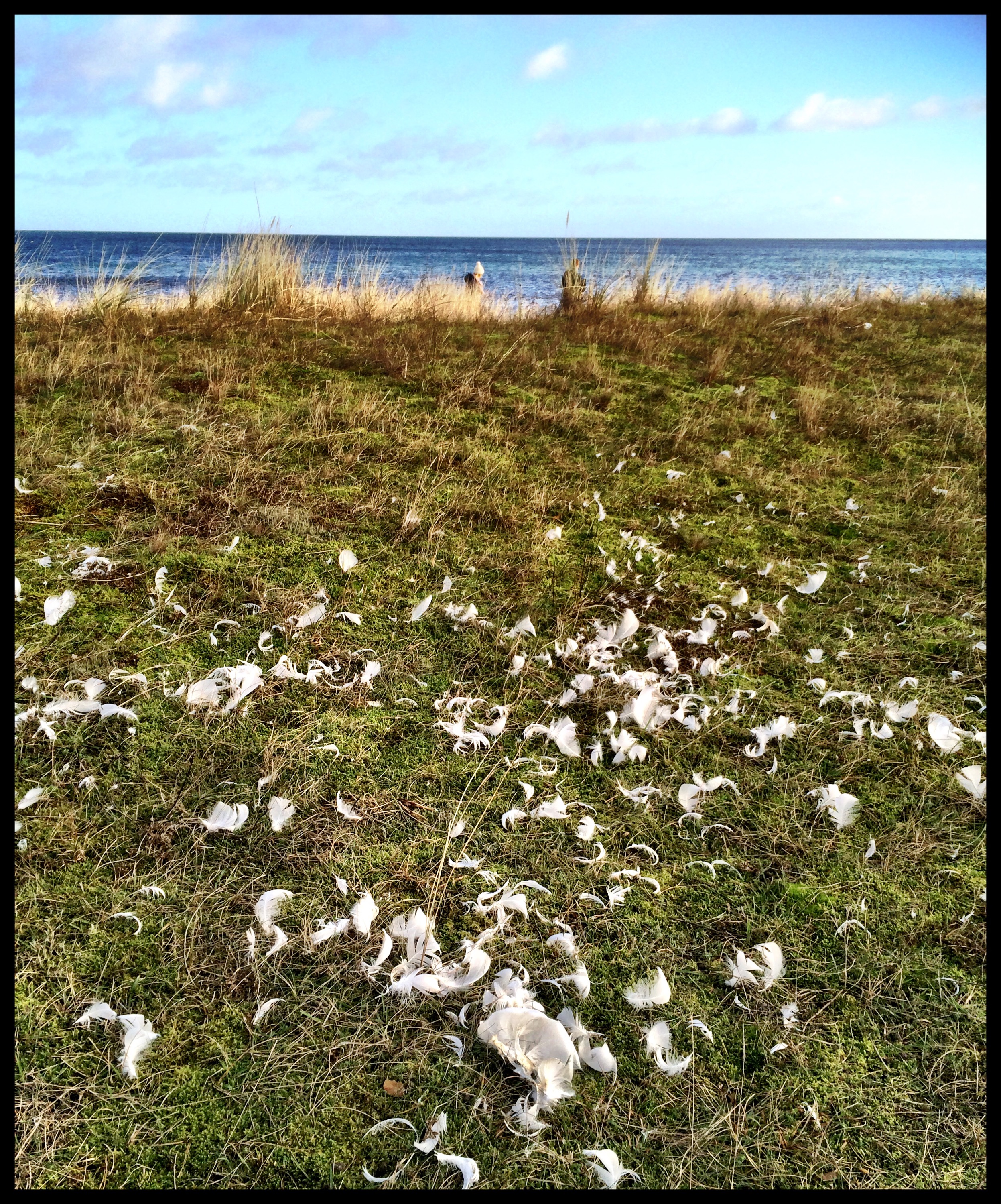
Min plan för 2015 är fredlig och stillsam. Jag kommer inte att bråka med folk jag inte känner. Det är min bild av fred på jorden.
Det finns alltför många oplockade gäss och nyplockade svanar ändå.
 Tysta tankar