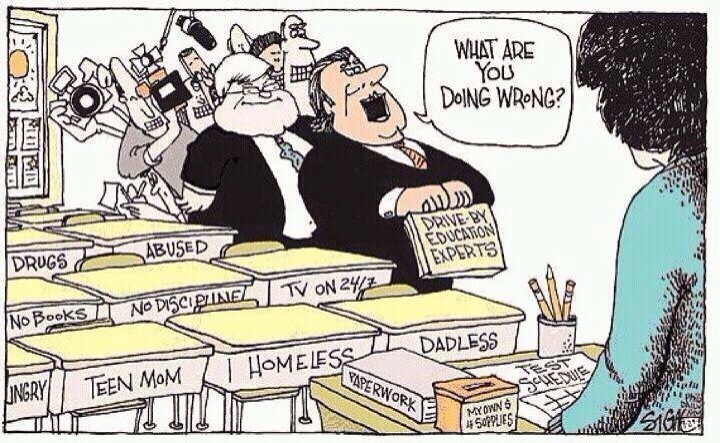
Jag önskar mig en ny ton i skoldebatten under 2014.
Några sådana tecken?

Jag önskar mig en ny ton i skoldebatten under 2014.
Några sådana tecken?

Den största frestelsen för ett religiöst förhållningssätt till tillvaron är förmodligen moralismen. Som den svenske ärkebiskopen Nathan Söderblom skrev i förra seklets början i en bok om Martin Luther med titeln ”Humor och melankoli”: ”Människor, som fyllas av ett patos, vare sig det gäller livets eller tankens problem, blir lätt om de saknar humor och självironi innestängda i en het atmosfär utan luftväxling.” Söderblom pekar här på humorn som en kristen livshållning som motverkar uppblåstheten hos de patosfyllda anspråk som lätt görs i religionens namn och som förvandlar religion till moralism.
Om humor är ett sätt att stå ut, som i den judiska vits jag inledde med, så innebär inte detta nödvändigtvis ett slags cyniskt distanserad hållning till den mänskliga komedin som vägrar ta något på allvar. Tvärtom finns det anledning att tro att humor och allvar inte är varandras motsatser. Det existentiella engagemang som exempelvis tar sig i uttryck i en religiös tro går utmärkt att förena med en insikt om det bristfälliga, provisoriska eller rent utav komiska i ens egen gestaltning av denna. Religion och humor verkar alltså gå utmärkt att förena, och kanske är den kristna föreställningen om hur detta går till just en dimension av julens budskap?
OLA SIGURDSON
Jag har hittat en hel del nya komiker på Netflix. Men vad är humor – egentligen?
En stark text – det kunde varit här.
Till den här listan lägger jag gärna en favorit:

https://twitter.com/acwiberg/status/419491852421586945
Kamrater hyllar Återträffen och jag har svårt att motivera mitt smygande obehag inför filmen. Anders Johansson sätter ord på några av mina invändningar.
Jag kurar framför brasan. Ett skådespel utan revanschism och individualism.

Jag ska ta itu med den här frågan nästa vecka.
https://twitter.com/daddy_san/status/418630878034542592
Jag trodde fransmän var arroganta? Här har vi en fin kille som verkligen anstränger sig – och så händer detta!
Susan Faludi granskar den framgångsrika rörelsen Lean in med Sheryl Sandberg som ledare:
From the sounds of recent pronouncements, it might seem that efforts to elevate the woman worker have finally paid off. With giddy triumphalism, books like Hanna Rosin’s The End of Men: And the Rise of Women and Liza Mundy’s The Richer Sex: How the New Majority of Female Breadwinners Is Transforming Sex, Love, and Family (both published in 2012) celebrate the imminent emergence of a female supremacy. “For the first time in history, the global economy is becoming a place where women are finding more success than men,” Rosin declared, noting that twelve of the fifteen jobs projected to grow the fastest in the United States in the next decade “are occupied primarily by women.” The female worker, she wrote, is “becoming the standard by which success is measured.” Mundy, who called this supremacy the “Big Flip,” predicted that, thanks to the new economy, we would soon be living in a world “where women routinely support households and outearn the men they are married to,” and men “will gladly hitch their wagon to a female star.”
A star like Sheryl Sandberg, whose feminism seems a capstone of female ascendancy. Never mind that the “fastest-growing” future occupations for women—home health aide, child care worker, customer service representative, office clerk, food service worker—are among the lowest paid, most with few to no benefits and little possibility for “advancement.” Progress has stalled for many ordinary women—or gone into reverse. The poverty rate for women, according to the Census Bureau’s latest statistics, is at its highest point since 1993, and the “extreme poverty rate” among women is at the highest point ever recorded.
Faludi vågar diskutera samband mellan klass och kön. Den här kulten av framgångsrika kvinnor riskerar att slå hårt mot andra perspektiv.
But there seems to be little tangible cross-class solidarity coming from the triumphalists, despite their claims to be speaking for all womankind. “If we can succeed in adding more female voices at the highest levels,” Sandberg writes in her book, “we will expand opportunities and extend fairer treatment to all.” But which highest-level voices? When former British prime minister Margaret (“I hate feminism”) Thatcher died, Lean In’s Facebook page paid homage to the Iron Lady and invited its followers to post “which moments were most memorable to you” from Thatcher’s tenure. That invitation inspired a rare outburst of un-“positive” remarks in the comment section, at least from some women in the U.K. “Really??” wrote one. “She was a tyrant. . . . Just because a woman is in a leadership position does not make her worthy of respect, especially if you were on the receiving end of what she did to lots of people.” “So disappointing that Lean In endorses Thatcher as a positive female role model,” wrote another. “She made history as a woman, but went on to use her power to work against the most vulnerable, including women and their children.”
Det är en lång och krävande text. Faludi klär av en rörelse in på bara benen och företrädarna framstår som egoistiska marknadsromantiker. Feminismen har blivit en framgångsteologi.
Frågan är om det finns svenska paralleller?

Vissa texter slår hårt. I Sverige är vi vana vi låsta positioner och enkla frågeställningar. När jag läser intervjun med Camille Paglia är min första reaktion lite nervös. (Behöver vi fler provokatörer?) sen tänker jag att detta är en kvinna som erövrat rätten att vara kritisk genom hårt intellektuellt arbete.
Ms. Paglia argues that the softening of modern American society begins as early as kindergarten. “Primary-school education is a crock, basically. It’s oppressive to anyone with physical energy, especially guys,” she says, pointing to the most obvious example: the way many schools have cut recess. “They’re making a toxic environment for boys. Primary education does everything in its power to turn boys into neuters.”
She is not the first to make this argument, as Ms. Paglia readily notes. Fellow feminist Christina Hoff Sommers has written about the “war against boys” for more than a decade. The notion was once met with derision, but now data back it up: Almost one in five high-school-age boys has been diagnosed with ADHD, boys get worse grades than girls and are less likely to go to college.
Ms. Paglia observes this phenomenon up close with her 11-year-old son, Lucien, whom she is raising with her ex-partner, Alison Maddex, an artist and public-school teacher who lives 2 miles away. She sees the tacit elevation of “female values”—such as sensitivity, socialization and cooperation—as the main aim of teachers, rather than fostering creative energy and teaching hard geographical and historical facts.
By her lights, things only get worse in higher education. “This PC gender politics thing—the way gender is being taught in the universities—in a very anti-male way, it’s all about neutralization of maleness.” The result: Upper-middle-class men who are “intimidated” and “can’t say anything. . . . They understand the agenda.” In other words: They avoid goring certain sacred cows by “never telling the truth to women” about sex, and by keeping “raunchy” thoughts and sexual fantasies to themselves and their laptops.
Politically correct, inadequate education, along with the decline of America’s brawny industrial base, leaves many men with “no models of manhood,” she says. “Masculinity is just becoming something that is imitated from the movies. There’s nothing left. There’s no room for anything manly right now.” The only place you can hear what men really feel these days, she claims, is on sports radio. No surprise, she is an avid listener. The energy and enthusiasm “inspires me as a writer,” she says, adding: “If we had to go to war,” the callers “are the men that would save the nation.”


 Tysta tankar