UR – intervju med Kemma Leijnse. Klokt och spännande! Nyanserat och tankeväckandehttp://t.co/ENteo9Z1#skolan http://t.co/H0ZIgOmh
— Mats Olsson (@tystatankar) January 21, 2013
Läs boken!
Läs boken!
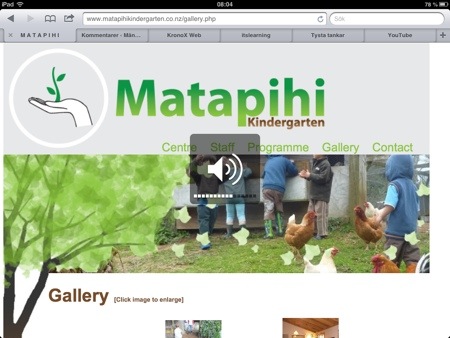
Jag planerar en kurs och letar efter goda exempel på utomhuspedagogik. Den här förskolan på Nya Zeeland verkar spännande.
Har du några tips?
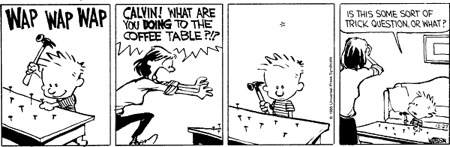
Jag länkar till en lärorik artikel om Kalle och Hobbe.
1) öppna klassrummen – öka transparens
2) lärarna måste våga ta risker
3) “go light on judgement”
Jag gillar den här diskussionen om professionalitet. Går det att förena styrning med lärares frihet att utforma undervisningen?
Erfarenheterna från Ontario pekar åt det hållet.
Uppdatering
Jämför med den här rapporten:
Prof Christopher Cornwell, of the University of Georgia, who led the study, said: “The skill that matters the most in regards to how teachers graded their students is what we refer to as ‘approaches toward learning’.
“You can think of ‘approaches to learning’ as a rough measure of what a child’s attitude toward school is: It includes six items that rate the child’s attentiveness, task persistence, eagerness to learn, learning independence, flexibility and organisation.
“I think that anybody who’s a parent of boys and girls can tell you that girls are more of all of that.”
The learning that happens outside school. More than ever before, 2013 will bring a recognition that learning can happen anytime, anywhere—not just in a classroom and not just during the school day. This coming year, we’ll see a greater focus on the “informal education” that happens in places like science museums and nature centers. We’ll continue to explore, for ourselves and with our children, the wealth of information and ideas available on the web (while finding ways to avoid its abundant falsehoods and nonsense).
Jag är för breddad rekrytering. Alltid.
Länk.
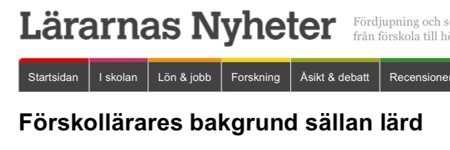
Av nybörjarna på läkarprogrammen har 70 procent högutbildade föräldrar läsåret 2011/12. Motsvarande siffror för dem som läser till arkitekt och psykolog är drygt 60 procent. På förskollärareutbildningen är andelen 17 procent och för dem som läser till grundlärare 24 procent, vilket båda är under motsvarande andel i befolkningen. 25 procent (i åldrarna 19-34 år) har högutbildade föräldrar.
Jag hittar en tidning på Pressbyrån som för 89:- förklarar hur kursplanerna är tänkta att fungera. Dessutom på ett lättläst språk.
HEJA!
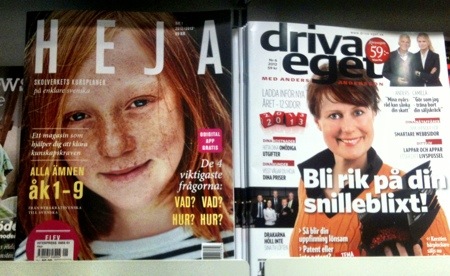
Vi lever i de glada entreprenörernas tid.
En tröst är att svenska barn tycks ha en hyfsat realistisk bild av den egna förmågan:
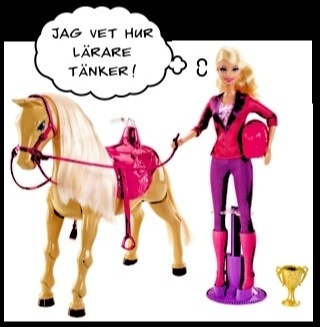
But compared to countries such as New Zealand, Australia, Sweden, Japan, South Korea and Great Britain, American students appeared to have an inflated sense of their science abilities. Students in those other countries were better when it came to scientific knowledge than American students, but it was the Americans who had the higher opinion of themselves as students of science.
Jag tycker att det är viktigt att uppmuntra barn inom det naturvetenskapliga området. Frågan är om det går att undvika den här hejaklackseffekten?
 Tysta tankar