
https://twitter.com/lenbys/status/313875678057615360
Det är konstigt att de här listorna ofta är på så jämna tal. Jag undrar om författaren har vakt bort något viktigt?

https://twitter.com/lenbys/status/313875678057615360
Det är konstigt att de här listorna ofta är på så jämna tal. Jag undrar om författaren har vakt bort något viktigt?
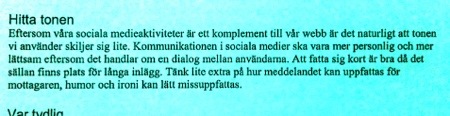
Jag är skeptisk. Även om jag förstår behovet av kontroll känns dessa goda råd en aning förnumstiga.
Den här sången länkade några studenter till angående pågående kurs och jag tror att det finns anledning att stanna upp inför budskapet:
https://twitter.com/statensmedierad/status/303385875214106624
Vi brukar diskutera om digital bildning är ett mål eller ett medel. Ska det vara ett eget mål som examineras för sig – eller är datorn ett redskap bland andra?
Det är nog enklare att bara göra det…
8 Oral Sex
143 I Love You
cu46 See You For Sex
DUM Do You Masturbate?
GNOC Get Naked On Cam
GYPO Get Your Pants Off
GNRN Get Naked right Now
FMH Fuck Me Harder
IWS I Want Sex
IIT Is It Tight?
Q2C Quick To Come
RUH Are You Horny?
TDTM Talk Dirty To Me
S2R Send To Receive
NIFOC Naked In Front Of Computer
SorG Straight Or Gay?
JO Jerk Off
PAW Parents Are Watching
PIR Parent In Room
POS Parent Over Shoulder
YWS You Want Sex
WYCM Will You Call M?e
RU18 Are You 18?
CD9 / Code 9 Parent / Adult around
NALOPKT Not A Lot Of People Know This
Imagine, if you will, what follows is the beginning of a guide for academics on how best to give a talk. The first paragraph might go something like this: “Walk into the room – do make sure that you open the door first, or you might get a nasty bang on the nose! You might notice there are people sitting in seats in front of you. Don’t be scared. They are called the audience, and they are there to listen to you. They might ask questions afterwards. You will need to think carefully about your answers: you wouldn’t want to say anything silly!
Förklaring 1 – oro för att göra fel
Here I think we may have reached the nub of the problematic mismatch between some academics and social media. Maybe it’s not so much fear of the technology; it’s a fear of losing control. The most effective blogs or tweets are those that express personal views, rather than trotting out the corporate message. Indeed, there is growing evidence that if people simply broadcast work-related content, with no personal angle, their blogs or tweets will be unconvincing, sterile, and thus unpopular.
(…)
Social media involves a loss of control and an exercise in trust and openness. But the kind of academic who will only express their ideas after years of patient, private research, probably will not want to blog about them, or open them to the scrutiny of the twittersphere before the production of the ‘Great Work’. The idea that someone else might do so, perhaps by tweeting a conference paper, will be even less welcome. In such cases no amount of calming words of one syllable will offer reassurance, or get the sceptics tweeting.
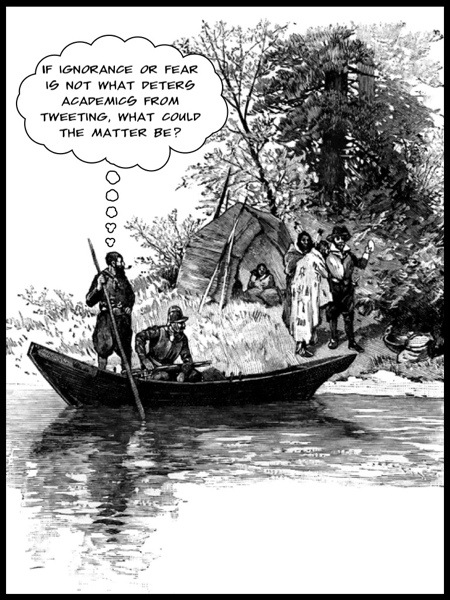
Förklaring 2 – oro för att tappa kontroll
To me this is a peculiar kind of technological confusion. If we ban live tweeting, do we also ban conversations about a paper in the lunch queue or the bar? If people really are anxious about tweeting or blogging, because it might reveal too much about them or their work, does that mean that they don’t talk to their colleagues over coffee, whether about research or the latest gossip?
Slutsatsen är förlamande – akademiker är rädda för kommunikation.
Claire Warwick is professor of digital humanities at UCL – follow her on Twitter @clhw1
Nätet är fantastiskt och allra mest spännande är Twitter. Samtidigt händer det ibland att vi som tillbringar för mycket tid där tror att den digitala världen är mer betydelsefull än den fysiska.
Jag påminner mig själv om att det till sist är de fysiska handlingarna som är betydelsefulla. Att ta ansvar för sitt liv handlar inte om 140 tecken på en skärm.
Poserande godhet och enkla lösningar står jag inte ut med.

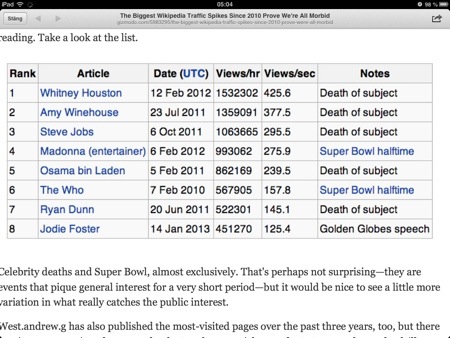
Jag njuter av att inte behöva skriva om den obehagliga soppan. Många andra känner sig manade. Ovanstående infograf lyfter diskussionen från det begränsade svenska perspektivet.
 Tysta tankar