
Vi är vana att hålla det mesta i luften.

Vi är vana att hålla det mesta i luften.
Jag vet att många har svårt att förhålla sig till tanken på att förskolan inte alltid är bra för alla barn. Det var enklare förr. Då var kampen för daghemsutbyggnad ett uttryck för kvinnans frigörelse. Idag svajar positionerna.

Jag vet att många skyller skolans misslyckande på den här metoden och tänker att det finns misstag att lära av.

Det är ganska många. Jag hoppas att de inte blir utkonkurrerade av 714 kvinnor som gjort samma val.
Jag försöker samla uppgifter om könsbalansen på de olika lärosätena – det är inte så lätt. Till sist hittar jag alla program. Det finns mycket att fundera över och jag ser fram emot att erfarenheterna tas tillvara vid den konferens som kommer att ordnas i Umeå?
Sökandetillförskollärarutbildningen2013kön

Studentbesök är ofta intensiv fortbildning.

En spännande presentation – alltid!
Vilka effekter har förskolan på framtiden. Förskolan som en global investeringsarena.
Förskolan tycks vara lösningen på allt. Hur förvaltar vi denna goodwill?
Ingegerd lyfter omsorgens betydelse.
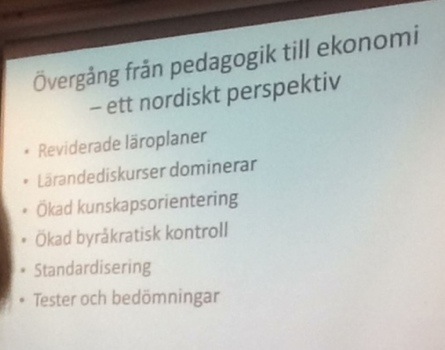
Undrar om det är fler som twittrar här?
“I think in Sweden you believe officially in the value of democracy…”
Hörde jag en ironisk underton?
“Det finns idag inga teorier som inte är relationella”
Pramling citerar Ken Robinson “Vi utbildar barn för ett samhälle vi inte vet något om”.
Efter paus rullar det vidare med Johan Dahlbeck:
Hur bör jag leva – vad är min kropp kapabel till?
Nietzsche och Deleuze….
Många tröttnar. Jag undviker skuldmedvetet studenternas frågor. I längden tär det på arbetsglädjen att inte förstå det system jag borde kunna försvara.
Vi undervisar om läraryrkets etik. Jag tröstar mig med bilder och citat.
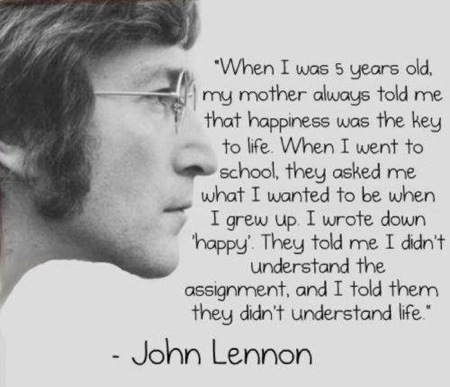
Alla hatar fusk. Hela systemet bygger på att vi kan kontrollera och möta studenternas kunskapsutveckling. Därför väcker anklagelserna starka känslor hos alla inblandade.
Går det att förstå fusk på ett annat sätt?
Kohn goes on to describe a grocery list of ways to create an environment ripe with cheating. Cheating is more common when:
teachers have little to no relationship or connections with their students
teachers care care more about other things than their students
students experience their learning as boring, irrelevant, or overwhelming
learning is prescribed rigidly in a prefabricated curriculum
students perceive that the ultimate goal of learning is to get good grades
there is an emphasis on honor rolls and other incentives to heighten the salience of grades
parents offer financial inducements for academic success
schools value product more than process, results more than discovery and achievement more than learning
students are led to focus more on how well they’re learning than what they’re learning
teachers emphasize good grades, high test scores and being smart
competition is valued over collaborationAlternatively, Kohn explains that cheating is far less common when:
learning is genuinely engaging and meaningful to the students
exploring ideas remains a priority over a single-minded emphasis on rigor
students’ opinions are respected and welcomed in a democratic classroom
a disposition to finding out about the world is nourished
teachers made it clear to kids that the point of school is to enjoy learning and that understanding mattered more than memorizing and when mistakes were accepted as a natural result of exploration.


 Tysta tankar