Så här känner jag mig efter 17 studentredovisningar i matematikkursen
Reply

Det är en jättebra kampanj – verkligen.
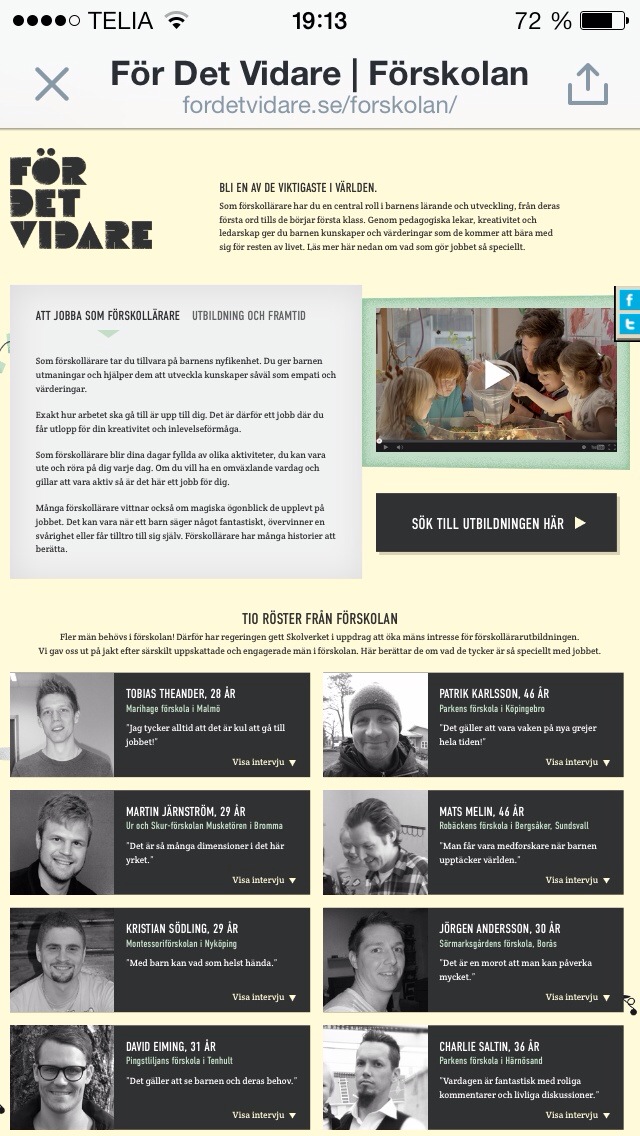
Nu ser jag fram emot nästa steg. Och sneglar mot andra satsningar.
Jag gillar delande som idé, men är osäker på om stipendiet förstärker bilden av förskolan som en plats där individuella prestationer inte belönas? Skulle detta varit möjligt på andra arbetsplatser?
De norska rekryteringsincitamenten ligger på institutionsnivå. Det är nog bäst så.
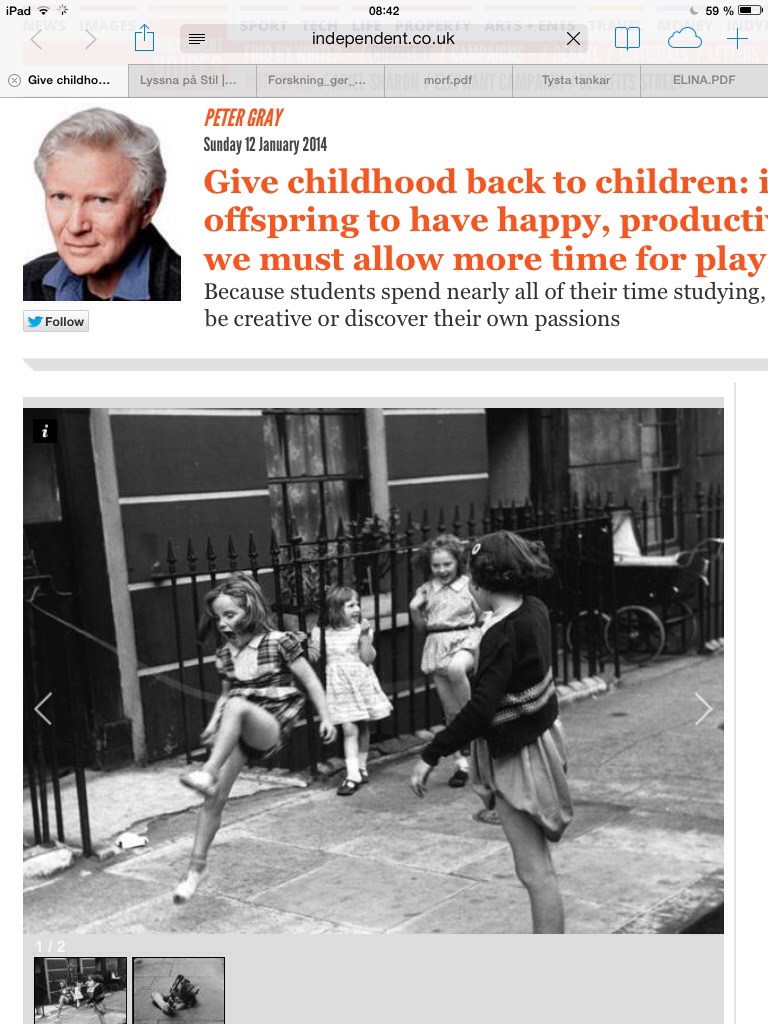
I den här artikeln driver Peter Gray tesen om 50-talet som lekens guldålder. Jag säger inte emot.
I’m lucky. I grew up in the United States in the 1950s, at the tail end of what the historian Howard Chudacoff refers to as the “golden age” of children’s free play. The need for child labour had declined greatly, decades earlier, and adults had not yet begun to take away the freedom that children had gained. We went to school, but it wasn’t the big deal it is today. School days were six hours long, but (in primary school) we had half-hour recesses in the morning and afternoon, and an hour at lunch. Teachers may or may not have watched us, from a distance, but if they did, they rarely intervened. We wrestled on the school grounds, climbed trees in the adjacent woods, played with knives and had snowball wars in winter – none of which would be allowed today at any state-run school I know of. Out of school, we had some chores and some of us had part-time jobs such as paper rounds (which gave us a sense of maturity and money of our own); but, for the most part, we were free – free to play for hours each day after school, all day on weekends, and all summer long. Homework was non-existent in primary school and minimal in secondary school. There seemed to be an implicit understanding, then, that children need lots of time and freedom to play.
I Sverige fortsätter skolans annektering av barndomen genom ett tionde skolår.
Generally, boys are soft wired to be competitive and active, and are constantly in search of moments to prove their worth and value (in girls and women, oestrogen and oxytocin influence us in different ways, along with their cultural conditioning).
The playground provides an early opportunity for boys to demonstrate worth but the safe, ‘fantastic plastic’ playgrounds of today are emasculating boyhood.
We’ve removed the traditional monkey bars, seesaws and maypoles which were all wonderful opportunities to stretch oneself, hurt oneself when a poor decision was made and learn how to play well with other children – this is where we learnt healthy risk management.
Today’s playgrounds are less engaging and statistics show that children are injured more in modern playgrounds than in the scary old playgrounds because they no longer know how to cope with and manage risk. And keeping kids indoors certainly hasn’t made them any safer either.
Jag är en lat bloggare. Numera tycker jag ofta att andra säger det bättre.
Henrik Brandao Jönsson beskriver hur pedofilskräcken ser ut i Brasilien. Vita män är särskilt misstänkte – bilden av förövaren har spridits i såpor och teveserier.
Missa inte berättelsen om hur Henrik bemöter anklagelserna – jag önskar att andra är lika rådiga.
Nu tänker jag värma upp inför fotbolls-VM MED Henriks bok om Brasilien.

Ibland är jag ovanligt stolt över mina kollegor!


Bilder är svårt. Jag är osäker på hur budskapet skulle tas emot i Sverige.
https://twitter.com/tystatankar/status/420453193697738752
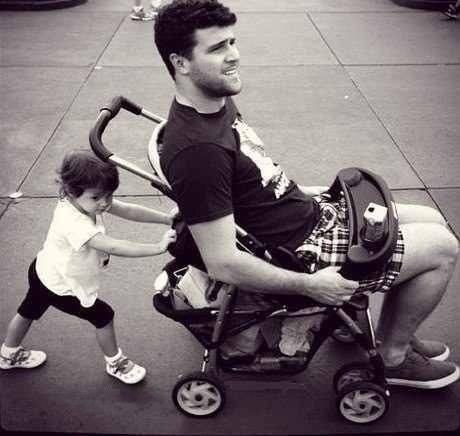
Men are not ‘biologically’ less suited to caring for children than women:
• when similarly supported, both sexes develop childcare skills at the same rate (Myers, 1982)
• through what they learn they can have similarly positive effects on their children and on family functioning (Cia et al, 2010; Melnyk et al, 2006;. Firestone, Kelly & Fike, 1980; Adesso & Lipson, 1981)
• there seem to be no biologically-based differences between the sexes in capacity to provide intimate care (Parke, 2008)
• there seem to be no biologically-based differences between the sexes in sensitivity to infants (for review, see Lamb et al, 1987): fathers’ responsiveness seems to vary depending on the degree to which men assume responsibility for the care of their infants (Lamb and Lewis, 2010).
• in rodents, complex neurobiological modifications (brain changes) have been found in both males and females that become parents and care for their ‘pups’. Such changes – flexible thinking, managing feelings and paying more attention to others – persist long after the pups are weaned, making active rodent parents of both sexes ‘smarter’ (Lambert, 2012).
• In humans, levels of ‘nurturing hormones’ (see below) are found to be the same in men and women exposed to ‘infant stimuli’ before their babies are born (Storey et al, 2000) and when interacting with them afterwards (Feldman et al, 2010).

 Tysta tankar