
Frågan om förädraledighet är poltiskt het. I Sverige överger KD pappamånaden och i den stora världen diskuteras Badinters tes om att ett överdrivet barnperspektiv (som utdraget ammande) hotar kvinnans frigörelse. Den franska feministen har skrivit en bok som skakar om, men också fått stort genomslag. Utifrån historiska och internationella exempel tycks hon argumentera för att moderskap alltid är en kvinnofälla och att männen per definition inte är att räkna med.
I den australiska tidningen The Monthly blir hon utförligt bemött och artikelförfattaren belyser frågans politiska dimensioner. Skandinavien framstår inte oväntat som ett föredöme när det gäller att förändra synen på fäders ansvar.
For an ‘heir’ of de Beauvoir, Badinter is surprisingly apolitical. Though she notes French mothers have higher birth rates than those of many other western nations, is this really due to them taking a leaf from their history of distant mothering? After all, such practices as wet nursing and foundling hospitals were widespread across Europe, including countries where birth rates are much lower. More likely, French women are better supported than elsewhere and are not forced to choose between motherhood and fulfilling paid work.
As in Scandinavia, the French government gives paid leave for up to three years and invests in higher quality childcare. French and Scandinavian women’s work rates are among the highest in the world. Scandinavian breastfeeding rates are also among the highest in the world, belying Badinter’s belief that breastfeeding is death to paid work.
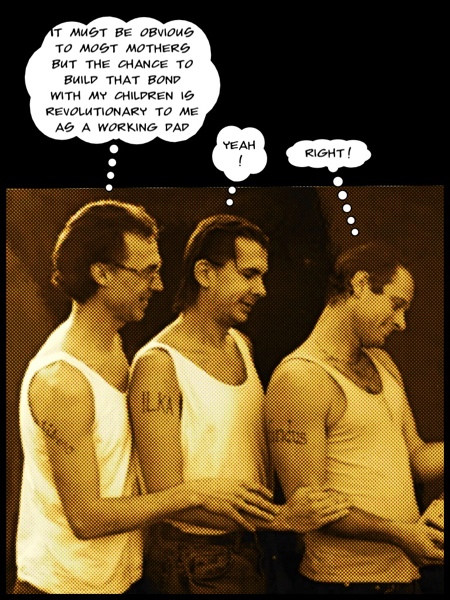
It is not only mothers who can be supported. Very early in her book, Badinter pronounces that men are hopeless. She says little more on the matter. Yet paid paternity leave, another welcome alternative to the ethic-less care that Badinter proposes, is changing and deepening our understanding of what it is to be a good father. Anna Wahl, from the Stockholm School of Economics, argues that Swedish paternity leave, which cannot be transferred to the mother, “moves the norm a little … It creates pressure on young men; now they have to explain why they’re not going to be at home … It’s not just anyone taking care of the child; it’s the father. It says he is irreplaceable.”
Jag var hemma ganska länge med båda våra barn. Det är jag stolt över och beklagar alla män som missar den sidan av livet.
Förvånansvärt många av våra kvinnliga vänner argumenterade för delad föräldraledighet men var ovilliga att släppa in männen. De skulle kanske ha behövt en liten dos Badinter. Modern är inte oersättlig, men exemplen från 1800-talets grymma vanvård ger ingen ledning för hur familjer ska organisera arbetsdelningen. Det är svårt att få tag på en bra amma och änglamakerskorna har dåliga tider.
In The Conflict: Woman and Mother, Badinter starts out in the dark place of parental ambivalence and, instead of heading for the light, ventures only deeper, drawing bogus lessons, even inspiration, from the killing fields of childhood.
 Tysta tankar